Popular Science Of Rotating Fasteners
 Jun 08, 2025|
 The rotating fastener refers to the central position where the rotating fastener is installed on the scaffolding frame tube, and the main node refers to the connection point between the horizontal bar and the vertical bar of the scaffolding pipe.
Introduction: The rotating fastener is a fastener used to connect parallel or oblique bars. The scissor diagonal bar should be fixed with a rotating fastener on the protruding end or vertical bar of the intersecting horizontal bar. The distance from the center line of the rotating fastener to the main node should not be greater than 150mm. Both ends of the one-line and open double-row scaffolding must be equipped with horizontal diagonal braces, and one should be set every 6 spans in the middle. The longitudinal overlap length is not less than 1 meter, and 3 rotating fasteners are set at equal intervals. The distance from the edge of the end fastener cover plate to the end of the overlapping longitudinal horizontal bar is not less than 100mm. The dead weight of the rotating fastener: one for each buckle point of the scissor brace, 14.6N/piece.
Main Function The main function of the rotating fastener: connect and fix two components and can rotate flexibly to facilitate construction. Fasteners generally refer to the intermediate connecting parts that connect two components. In construction projects, they are mostly used to fix steel pipe scaffolding with an outer diameter of Φ48mm.
Fasteners are divided into right-angle fasteners (cross fasteners, directional fasteners), rotating fasteners (movable fasteners, universal fasteners), butt fasteners (straight fasteners, direct fasteners), etc.
Commonly used fasteners in China are made of cast iron, and their mechanical properties should comply with the "Steel Pipe Scaffolding Fasteners" (GB15831-2006) material, not less than KT330-08. There are three types of fasteners: right-angle fasteners, butt fasteners, and rotating fasteners. They are packaged in woven bags, with 25 pieces per bag. The weight of each should be 1.1 kg (including bolts and nuts). Generally, anti-rust treatment is done by dipping in red anti-rust paint. Used in conjunction with rack pipes. The production and procurement ratio of general fastener products is 8:1:1. That is, the proportion is 80% for right angles, 10% for butts, and 10% for rotations.
Fasteners generally refer to the intermediate connecting parts connecting two components. In construction projects, they are mostly used to fix steel pipe scaffolding with an outer diameter of Φ48mm. Fasteners are divided into right-angle fasteners (cross fasteners and directional fasteners), rotating fasteners (movable fasteners and universal fasteners), butt fasteners (straight fasteners and direct fasteners), etc.
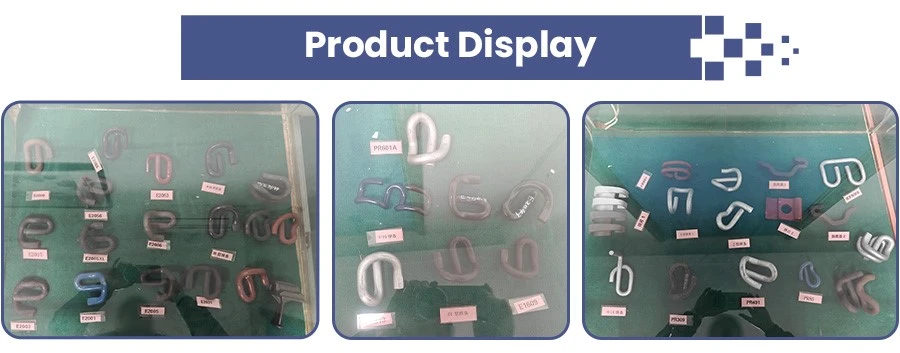
Types There are many types of fasteners, mainly new fasteners, steel pipe scaffolding fasteners, cast steel fasteners, T-shaped building fasteners, concrete sleeper fasteners, wooden sleeper fasteners, rail fasteners, Vossloh fasteners, malleable cast iron fasteners, scaffolding fasteners, railway fasteners, steel plate stamping fasteners, butt fasteners, rotating fasteners, right-angle fasteners.
Steel fasteners are generally divided into cast steel fasteners and steel plate stamping and hydraulic fasteners. The production process of cast steel fasteners is roughly the same as that of cast iron, while steel plate stamping and hydraulic fasteners are made of 3.5-5mm steel plates through stamping and hydraulic technology. Steel fasteners have excellent properties, such as anti-fracture, anti-slip, anti-deformation, anti-peeling, and anti-rust.
The largest cast iron fastener manufacturers in the country are concentrated in Cangzhou, Hebei, with a market share of about 80%; while the market share of steel fasteners is about 5-10%, and the main manufacturers are distributed in Hebei, Chongqing, Xinjiang, and other places.
The production method of fasteners includes the hot pressing process production method of the cover plate and the middle part. The production method of the cover plate is: after the steel plate is punched into a blank by a punching machine, the blank is heated, and the shape of the cover plate is punched out by a punching machine. After the workpiece is cooled, it is punched out of the bolt hole by a punching machine, and then the workpiece is placed on the punching machine, and a bulge is punched on both sides of the outer side of the opening hole to form it. The production method of the middle part is: after the steel plate is punched into a blank by a punching machine, a long hole is punched out at the longitudinal bolt installation position of the cross line, the workpiece is heated, and the shape of the middle part is punched out according to the mold; after cooling, the workpiece is placed on the inclined table, and each hole is finely punched and formed. The advantage of the present invention is that the production method of the fastener is a hot stamping process. This process increases the toughness of the fastener and makes it less likely to deform. After the fastener is hot stamped, the curvature of the R arc is increased, so that the area of the bayonet connection surface is increased, thereby increasing the contact area and increasing the friction force, making the building fastener safer and more reliable.