Popular Science Of Right Angle Fasteners
 Jun 15, 2025|
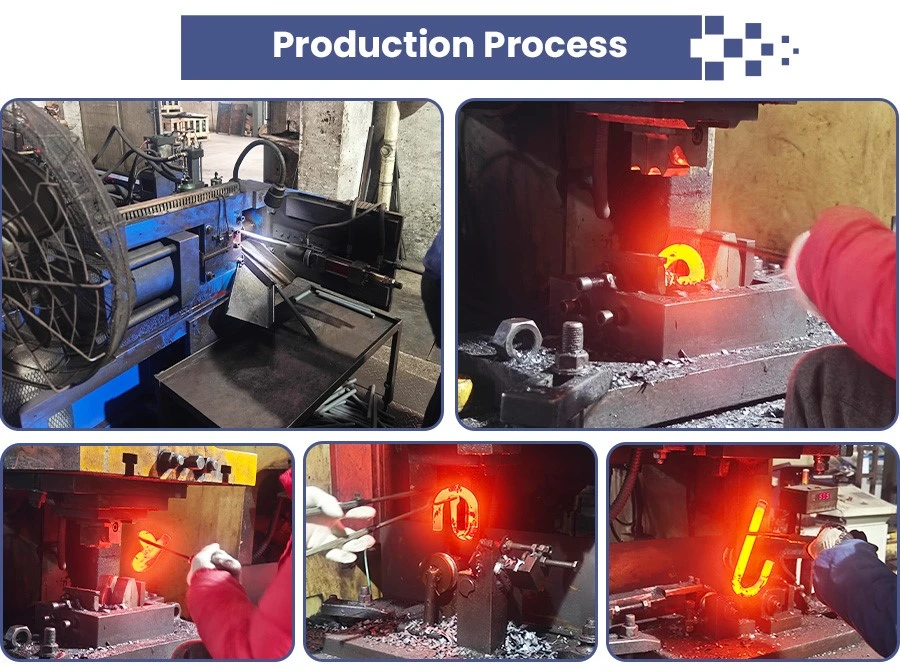
 Right-angle fasteners must be produced according to the drawings approved, according to the prescribed procedures.
The materials of the fasteners should meet the mechanical properties specified in the KTH330-08 grade in GB9440.
The fastener production must be prepared according to the proportion of ingredients specified in the process.
The heat treatment of fasteners strictly implements the temperature and time of each stage specified in the process.
The processing of fasteners is strictly carried out according to the process, and the bonding surface of the fasteners and steel pipes is strictly tested and shaped to ensure the anti-slip and tensile performance requirements of the fasteners.
The fasteners (except the base) must be tested by a 70N.m torque pressure test, and damage is not allowed.
The anti-slip performance of the right-angle fasteners, when P=14KN, △2≤0.5mm.
The tensile performance of the butt fasteners, when P=6KN, △2≤0.2mm.
The sand hole area is greater than 10 square millimeters. No more than one sand hole is allowed, and the cumulative area shall not be greater than 40 square millimeters.
Performance characteristics: The cumulative sand-bonding area of the fastener shall not exceed 100 square millimeters. The surface of the fastener is not allowed to have oxide scale. The other technical requirements shall comply with the provisions of GB15831-2006.
Strong anti-deformation ability Compared with ordinary steel plate stamping fasteners, due to different manufacturing processes, it breaks through the traditional stamping process on the material thickness (the stamping process can only reach a thickness limit of 3.5 mm, and it is easy to deform due to insufficient strength during actual use) and reaches 5 mm, which can completely ensure that it will not deform during use, thereby ensuring the safety and repeated effective use of the product. Right-angle fasteners can ensure the good performance and purpose of the fasteners in use, and ensure normal use during construction.
Strong anti-slip performance The anti-slip property of the fastener ensures that the steel pipe and the fastener are in a fitted surface state, with a large fitting area, overcoming the shortcomings of cast iron fasteners and steel pipes being fitted in points or lines, and eliminating the hidden dangers of steel pipes slipping off.
Advantageous fasteners have safety advantages, quality advantages, and brand advantages. It is worry-free and labor-saving to engage in fastener rental, and the rental income exceeds the rental of inferior iron fasteners. Easy maintenance
Because the product itself is not easy to rust or break, it is very convenient to repair after use, which not only reduces the difficulty of maintenance but also saves maintenance costs.
Strong anti-corrosion ability The whole piece is double anti-corrosion treatment by passivation and galvanizing, and its anti-corrosion ability is greatly improved, and the service life is long, far exceeding the service life of cast iron fasteners.
Strong anti-slip ability adopts a new type of connection. The new nut ensures that the fastener can always be firmly fixed vertically when the steel pipe is deformed, eliminating the possibility of the steel pipe slipping.
Fasteners generally refer to the intermediate connecting parts connecting two components. In construction projects, they are mostly used to fix steel pipe scaffolding with an outer diameter of Φ48mm. Fasteners are divided into right-angle fasteners (cross fasteners and directional fasteners), rotating fasteners (movable fasteners and universal fasteners), butt fasteners (straight fasteners and direct fasteners), etc.
There are many types of fasteners, mainly new fasteners, steel pipe scaffolding fasteners, cast steel fasteners, T-shaped building fasteners, concrete sleeper fasteners, wooden sleeper fasteners, rail fasteners, Vossloh fasteners, malleable cast iron fasteners, scaffolding fasteners, railway fasteners, steel plate stamping fasteners, butt fasteners, rotating fasteners, right-angle fasteners.
Steel fasteners are generally divided into cast steel fasteners and steel plate stamping and hydraulic fasteners. The production process of cast steel fasteners is roughly the same as that of cast iron, while steel plate stamping and hydraulic fasteners are made of 3.5-5mm steel plates through stamping and hydraulic technology. Steel fasteners have superior properties, such as anti-fracture, anti-slip, anti-deformation, anti-peeling, anti-rust, etc.
The largest cast iron fastener manufacturers in the country are concentrated in Cangzhou, Hebei, with a market share of about 80%; while the market share of steel fasteners is about 5-10%, and the main manufacturers are distributed in Hebei, Chongqing, Xinjiang, and other places.
Development Status: The commonly used fasteners in China are made of cast iron, and their mechanical properties should comply with the "Steel Tube Scaffolding Fasteners" (GB15831-2006) materia,l not less than KT330-08. There are three types of fasteners: right-angle fasteners, butt fasteners, and rotating fasteners. They are packed in woven bags, 25 pieces per bag. The weight of each should be 1.1 kg (including bolts and nuts). Generally, they are rust-proofed by dipping in red anti-rust paint. They are used in conjunction with rack pipes. The production and procurement ratio of general fastener products is 8:1:1. That is, the proportion is 80% for right angles, 10% for butts, and 10% for rotations.