Popular Science of Elastic Rail Fasteners
 Jun 01, 2025|
 Elastic rail fastenings refer to fastening parts of rails and sleepers with elastic fastening parts.
IntroductionElastic rail fastenings refer to fastening parts of rails and sleepers with elastic fastening parts.
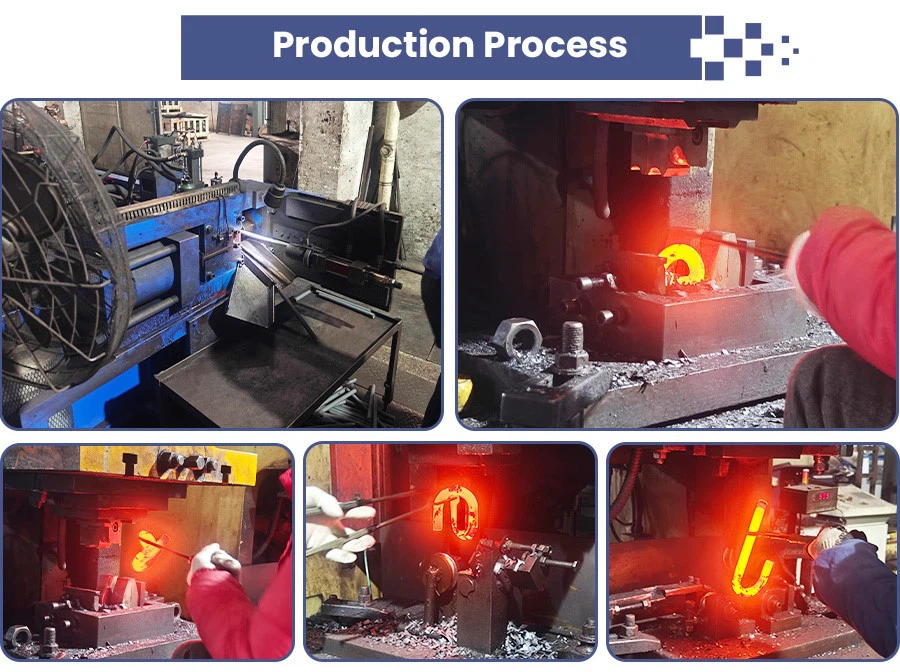
The elastic bar I and II fasteners used in China to fasten 60, 50 (kg/m) and other rails on concrete sleeper lines are composed of bolt spikes, nuts, flat washers, elastic bars, gauge baffles, baffle seats, rail pads, insulating buffer pads, insulating anti-rust coatings, and sulfur anchors. Fasteners suitable for large height adjustment of concrete wide sleepers, track plates, or integral roadbeds, such as elastic bar I height adjustment fasteners, spring sheet I height adjustment fasteners, and TF-Y elastic bar fasteners, also belong to this type.
The intermediate connecting parts of rail fasteners are also called rail fasteners. Track accessories are used to fasten rails and submachine parts. According to the type of sleepers, they are divided into two categories: fasteners for wooden sleeper lines and fasteners for concrete sleeper lines (other types of concrete machine lower parts lines)1.
Rail joints and rail joints The standard length of rails in my country is 12.5m and 25m. For 75kg/m rails, there is only one type of 25m. Later, there were two types of 50m and 100m, which were used to lay seamless lines. There are also shortened rails for the inner strands of curves. For the shortened rails of the 12.5m standard series, there are three types of short 40mm, 80mm, and 120mm; for 25m rails, there are three types of short 40mm, 80mm, and 160mm1.
The rails on the track are connected with plywood and bolts, which is called rail joints. The wheel-rail dynamic effect at the joint is large, and the maintenance and repair workload is also large. The joint is one of the weak links in the rail head structure.
The connection form of the joint can be divided into two types: suspended type and pad type, according to its relative position to the sleeper.
According to the relative position of the two strands of rail joints, it can be divided into two types: relative type and staggered type.
My country generally adopts the relatively suspended type, that is, the two rail joints are aligned left and right and located between the two joint sleepers.
According to their performance, rail joints can be divided into ordinary joints, special-shaped joints, insulating joints, conductive joints, expansion joints, frozen joints, etc.