





Classification of track fasteners
 Feb 26, 2023|
 Let’s take a look at how many types of fasteners there are.
There are many ways to classify fasteners, such as mixed type/separate type, bolt type/no bolt type, shrapnel type/clip type, shoulder block type/no shoulder block type, and so on. Don't talk about it, let's talk about the characteristics of the subway today, that is, it is divided into ordinary fasteners, shock-absorbing fasteners, and special fasteners.
—Ordinary fasteners are the most common fasteners that completely complete constraints and fix tasks. There are several types of fasteners that are more common.
- gusset type fasteners. That is, a base is fixed on the sleeper, and then a pinch plate is buckled and pressed on the bottom of the rail to connect with the bottom plate, and the rail can be buckled by tightening the bolt on the top, which is clear at a glance.
——Spike Backing Plate Hybrid Fastener. This is the only hybrid fastener among the fasteners mentioned today. The structure is more clear at a glance, that is, the rail is placed on the iron backing plate, and then the backing plate is nailed to the sleeper with spikes, and the bottom of the rail is also buckled. The earliest type of fasteners has been gradually eliminated.
——Elastic Ⅰ type separate fastener. The structure is similar to the gusset type fastener, that is, the gusset is replaced with an elastic strip (Omega-type elastic strip) or an extra elastic strip is pressed on the gusset plate, mainly to improve the longitudinal elasticity, and it is also tightened by bolts . At present, it is mainly used on the lines in the depot. The reason for this is, on the one hand, the problem of elastic matching, and on the other hand, it is because it has bolt fasteners (that is, the bolts need to be removed to remove the spring bars), maintenance and adjustment operations. large. It is also divided into gravel track bed and integral track bed. There are some small differences in shape, so I won’t talk about it separately.
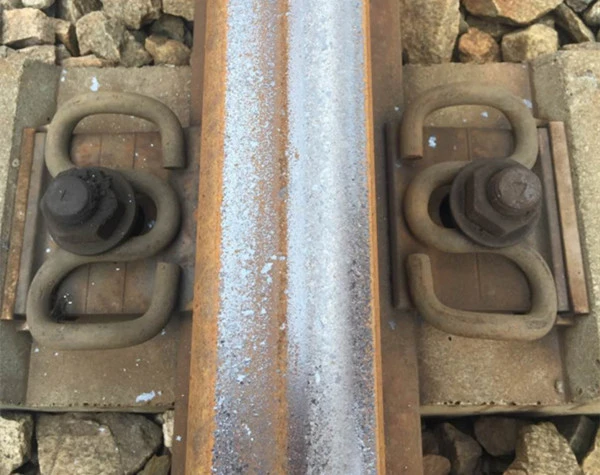
——Single-toe spring split fastener. This is the main force used on the domestic track at present. The structure is that the iron backing plate is fixed on the sleeper, and then the elastic strip buckles the bottom of the rail and is installed on the backing plate. The structure is simple and reliable. You may wonder, where does the downward binding force come from? In fact, it is very simple. The elastic strip can be regarded as a deformed spring. It will be stretched when it is installed, and it will also be in a stretched state after installation, so it has a tendency to shrink. This shrinking tendency provides Buckle force that restrains the rail downward. It is a typical boltless fastener, which does not require rust removal and oiling, requires less maintenance, is convenient to produce, and has fewer parts. It is a good match for subways.
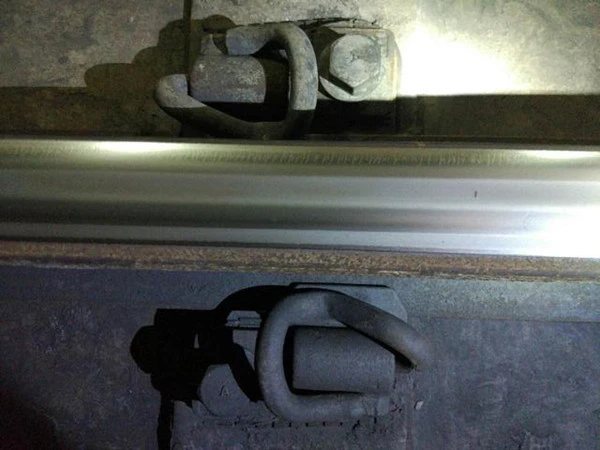
——Split type III fasteners with clips. It is very similar to the single-toe elastic fastener. Many people can't tell the difference. Some people call it "rebound strip". The difference is that the installation direction is different, and the buckle force is also larger than that of the single-toe elastic. Places of buckle pressure (big ramps, small radius curves, etc.)
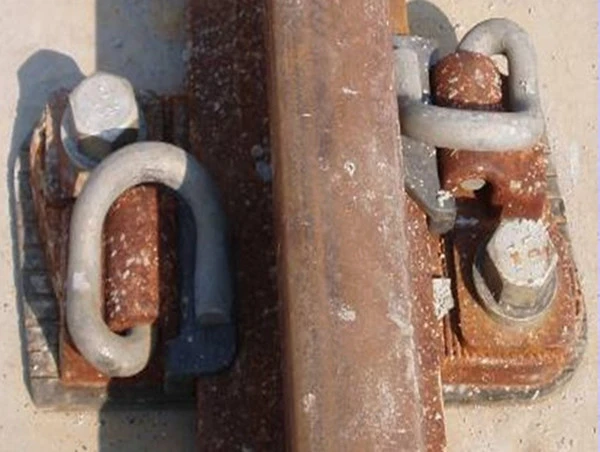
The above are common fasteners commonly used in subways. To say they are common means that they only complete the basic functions of fasteners, that is, restraint and fixation, and they correspond to fasteners that additionally fulfill other requirements.
— Shock-absorbing fasteners. This is a type of fastener that provides "special" services for the subway. A major feature of the subway is that it passes through the bustling urban area. There are dense buildings and roads on the ground, but there are people living on it, and it is impossible for sports cars to dig holes below without affecting the ground. , if there is an opera house above, it is not suitable for you to run the subway below, so in order to reduce or even eliminate these effects, shock-absorbing fasteners appear. This is a major feature of the subway, and it is also a big pitfall for those of us who work on the rails, because their shock absorption principles are without exception to reduce the stiffness of the longitudinal constraints on the rails (that is, to give the rails a larger vertical The elasticity of the rail, when passing the vehicle, the rails vibrate more up and down), and the connection between the vehicle and the tunnel structure is cut off (that is, the vibration of the vehicle is not transmitted to the tunnel) to reduce the disturbance to the ground. Yes, you read that right, shock absorption refers to reducing the vibration to the outside, but the vibration of the rail itself becomes larger, and the energy is conserved. For example, if you jump on the floor of your house in iron shoes and jump at home in air-cushioned shoes, the people downstairs feel differently.
-Vangurd fasteners. All the fasteners we mentioned above press the bottom of the rail to constrain the rail to vibrate up and down, but this one clamps the rail waist to prevent it from moving left and right. If there are few longitudinal constraints, a stopper is installed, and its stiffness is only average. One-tenth of the fastener.
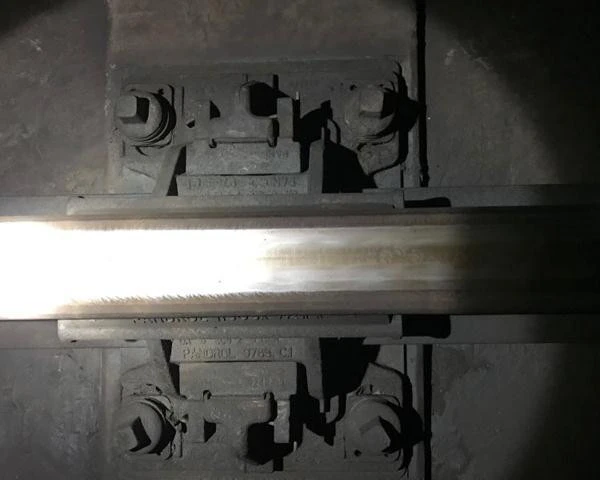
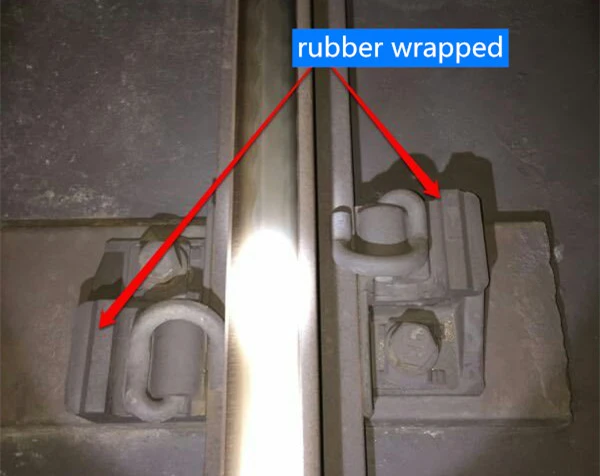
- Lord fasteners. Its structure is similar to that of the single-toe elastic fastener, that is, the bottom plate is completely wrapped with elastic rubber.
——Double-layer nonlinear shock-absorbing fasteners (GJ-Ⅲ fasteners) have only appeared in recent years. It divides the iron backing plate into two layers, and adds a layer of rubber in the middle, which is divided into locking type And the lock type, the performance of the rubber is the key.
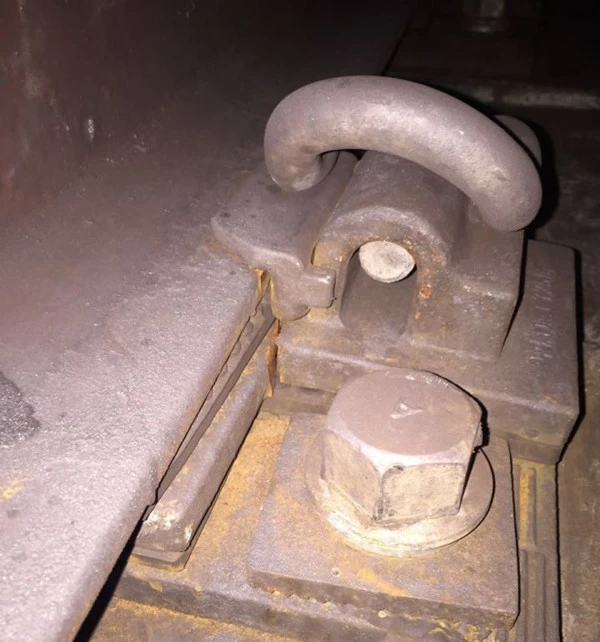
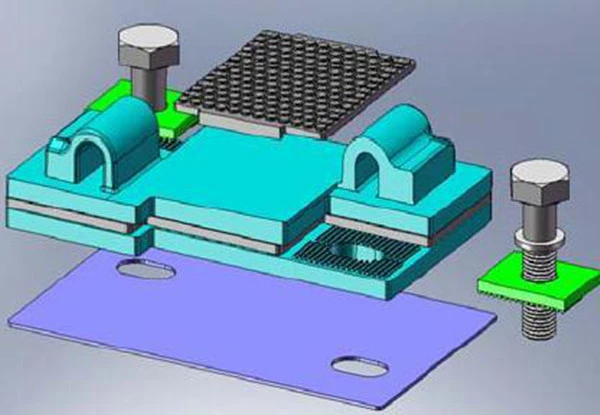
——Resonant floating rail fasteners. It is similar to the Vangurd fastener, but more practical.
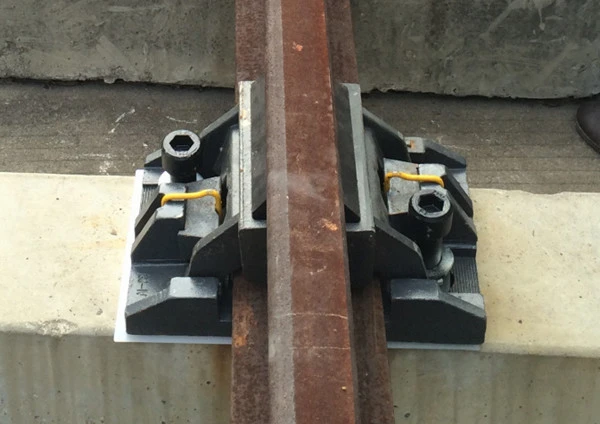
- Rail shock absorber fasteners (Cologne eggs). It is also one of the earliest shock-absorbing fasteners, and it is also realized by increasing the thickness and performance of the rubber layer. The position of the bolt holes is also special, and the appearance is also special.
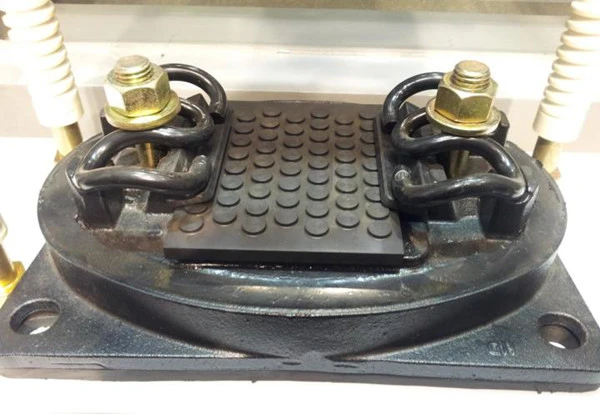
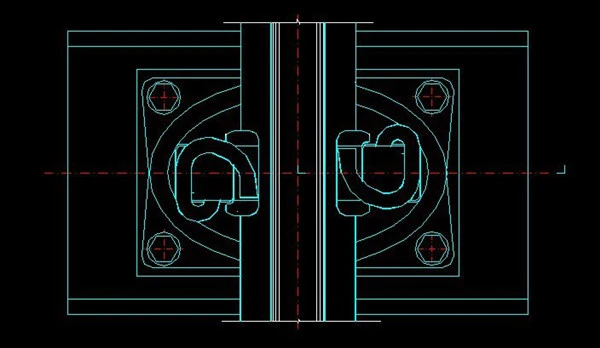
The shock-absorbing fasteners are finished. Some have been around for a long time and have been gradually eliminated. Some have just appeared and will definitely be updated in the future. However, their principle is to dissipate the vibration that is transmitted to the outside of the tunnel. In the tunnel and on the rails, the rails in these places will have more damage and wear, and the driving noise may also be louder.
- Special fasteners. In addition to the need for shock absorption, some special fasteners are also used on the subway. The only one I have come across so far is called an elastic small resistance fastener. It looks like this.
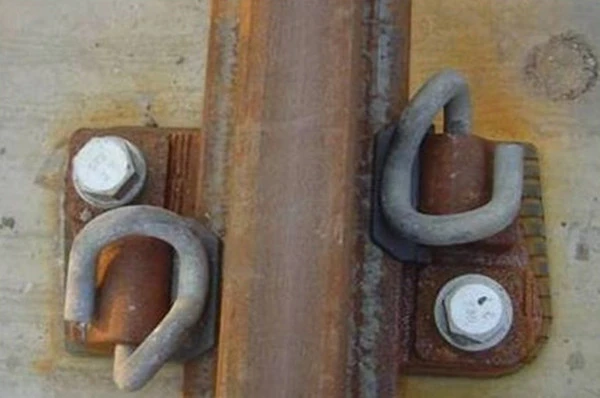
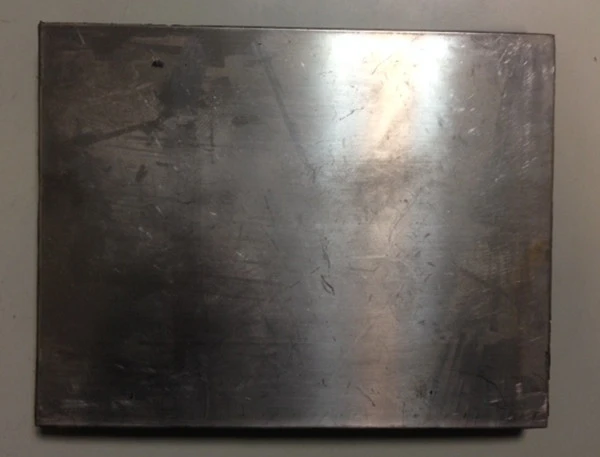
Many people may ask, isn’t this the same as the single-toe elastic fastener? It is true, except for one place, which is the backing plate at the bottom of the rail. All the gaskets at the bottom of the fastener rail we mentioned above are made of rubber. But its gasket is a layer of stainless steel plate pasted on the rubber plate, which is to reduce friction, that is to say, the longitudinal constraint we mentioned above will be much smaller, so that the long rails of the seamless line can be stretched more easily. To achieve the effect of self-releasing temperature stress.
That spacer looks like this
Finally, fasteners can not only provide constraints, but also provide the function of adjusting the position of the rail. By adjusting the gauge blocks on both sides of the rail bottom, the left and right position (gauge) of the rail can be adjusted. By placing rubber pads of different thicknesses on the bottom of the rail The slice can be adjusted up and down (high and low).
To sum up, track fasteners are used to restrain rails horizontally/vertically/longitudinally and provide adjustment space, meet electrified traction insulation requirements, have moderate elasticity, facilitate maintenance and repair, and can meet various special requirements. The components that are connected with the sleepers to form the track frame have various structures, but they remain the same.