





Reasons for the breakage of elastic fasteners
 Jun 09, 2023|
 In the fastener system, each component has high manufacturing precision, has high requirements for installation, and has relatively strict requirements for the use environment.
The damage and failure of fastener parts will lead to the decline of the overall function of the fastener and endanger the driving safety. The elastic strip is the main component that realizes the function of the fastener system. It often breaks and fails during use, which leads to increased force on the wheel and rail, accelerated damage to the components of the vehicle and the track, and even endangers driving safety. In order to achieve the purpose of safe and stable train operation, it is very necessary to study the problem of clip breakage in the field.
Among them, the elastic strip is the key component of the fastener system that provides elastic fastening pressure for the fastener system.
The clips mainly include ω-shaped clips, e-shaped clips, D-shaped clips, fast clips, PR clips, etc.
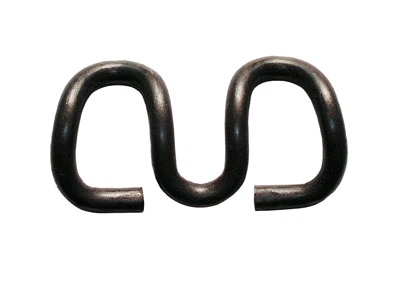
According to the fixing method of the clip, it is divided into a clip with a bolt and a clip without a bolt. The bolt clip is fixed on the iron seat by the bolt passing through the clip, while the boltless clip is through a special design, insert the clip into the socket on the iron seat, and provide pressure through its elastic deformation to fix it on the iron seat superior.
Compared with the bolted clip fastener system, the bolt-free clip fastener system has a relatively simple structure and is convenient for installation and maintenance.
According to the application of the railway fastener system and the force characteristics of the spring itself, the spring occasionally breaks. There are many reasons for the breakage, such as excessive deformation of the foundation under the rail, abnormal wheel load, and matching of the wheel-rail system. Problems, rail resonance, abnormal rail wear, excessive installation error of the fastener system, etc. The breakage of the elastic strip is inevitable, and it is acceptable to keep the breakage rate at a certain low rate. However, after the elastic strip breaks, the unconstrained part may splash out, hitting vehicle equipment and even pedestrians, causing vehicle damage or even endangering safety. .