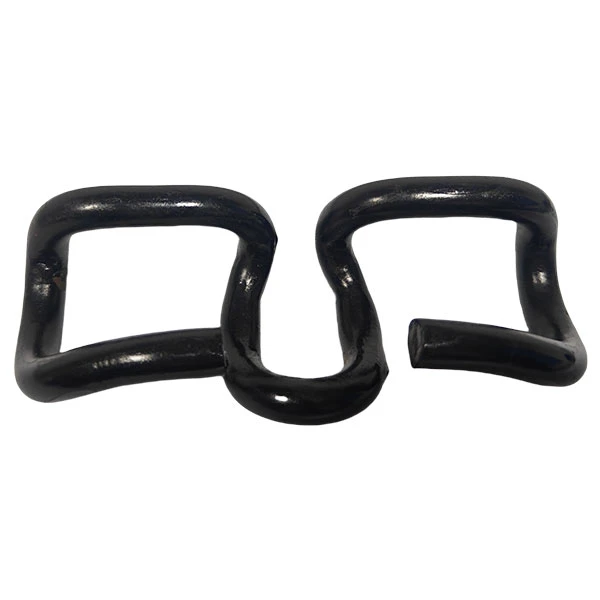
How Does Vossloh SKL Clip Tension Clamp Handle the Vibration Caused by High-Speed Trains
 Mar 27, 2025|
 The Vossloh SKL Clip Tension Clamp effectively manages the vibrations generated by high-speed trains through several mechanisms.
Damping through Elastic Properties
The clamp is designed with materials and a structure that has elastic characteristics. When the train wheels interact with the rails at high speeds and produce vibrations, the SKL Clip Tension Clamp can flex slightly. This flexibility allows it to absorb a portion of the vibrational energy. The clamp acts like a spring-dampener system, converting the kinetic energy of the vibrations into other forms such as heat. As a result, the amplitude of the vibrations transmitted to the rest of the track structure is reduced.
Stable Rail Fixation
By providing a firm and stable grip on the rail, the clamp helps to minimize the movement of the rail itself. The high-speed train's forces can cause the rail to vibrate both vertically and laterally. The Vossloh SKL Clip Tension Clamp's precise design and proper installation ensure that the rail is held tightly in place. This reduces the amount of free play or rattling of the rail, which in turn decreases the overall vibration levels.
Load Distribution
It also plays a role in distributing the load evenly. The clamp helps to transfer the forces from the rail to the sleepers and the underlying foundation more smoothly. When the forces are evenly distributed, it helps to reduce the concentration of stress points that could otherwise amplify vibrations. In this way, the Vossloh SKL Clip Tension Clamp is an important component in maintaining a stable and vibration-reduced railway track system during high-speed train operations.
For more Vossloh SKL Clip Tension Clamp information, please visit the following website: www.lanlingrailway.com