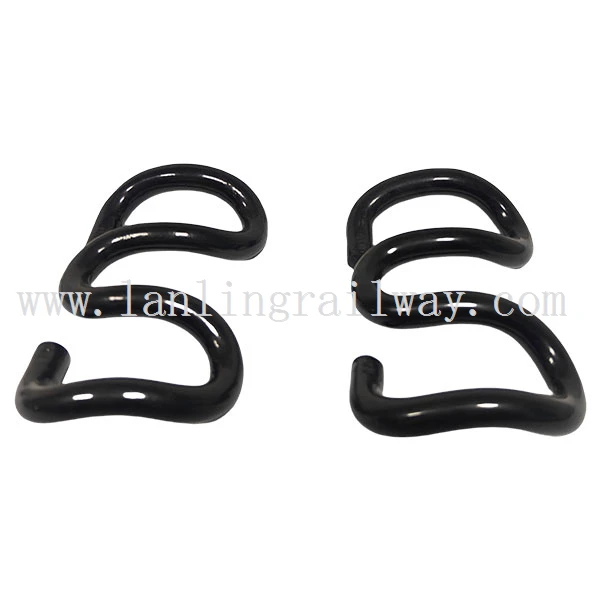
How Does Rail Tension Clip Ensure Rail Stability
 Feb 17, 2025|
 Rail tension clips play a crucial role in ensuring rail stability through multiple mechanisms.
Firm Grip on the Rails
The first way is by providing a firm grip. The design of the rail tension clip allows it to tightly clasp the rail. The clip's inner surface usually has a contour that matches the shape of the rail, ensuring maximum contact area. This tight hold counteracts the lateral forces that the train exerts on the rails. When a train turns or during windy conditions that might affect a moving train, the lateral forces can be significant. The tension clip's grip prevents the rail from moving sideways, thus maintaining the correct track gauge and alignment.
Tension and Compression Management
Rail tension clips also manage the tension and compression of the rails. Rails expand and contract due to temperature changes. The clip is designed to accommodate these thermal movements while still keeping the rails in a stable position. In cold weather, when the rails contract, the clip's tension keeps them from pulling apart. In hot weather, as the rails expand, the clip allows for this movement to a certain extent without losing its grip. By controlling these forces, the tension clip ensures that the rails remain stable and the track geometry is maintained.
Damping Vibrations
Another important aspect is vibration damping. As trains move, they create vibrations that can cause the rails to become unstable. The rail tension clip, through its elastic properties in some cases, absorbs and dissipates these vibrations. It acts as a shock absorber, converting the kinetic energy of the vibrations into other forms like heat. This reduces the amplitude of the vibrations that could otherwise lead to the loosening of the rails or damage to the track structure, thereby enhancing the overall stability of the railway.
If you have any questions or need more details about Rail Tension Clip, feel free to contact us, we will serve you wholeheartedly!